

New National Landlord Database Is Coming
The Government has confirmed that its new ‘Register your rental property’ service will begin rolling out across England from December 2026.
The service, previously referred to as the Private Rented Sector Database, will create a national register of landlords and privately rented properties. Registration will be a legal requirement for landlords of assured or regulated tenancies.
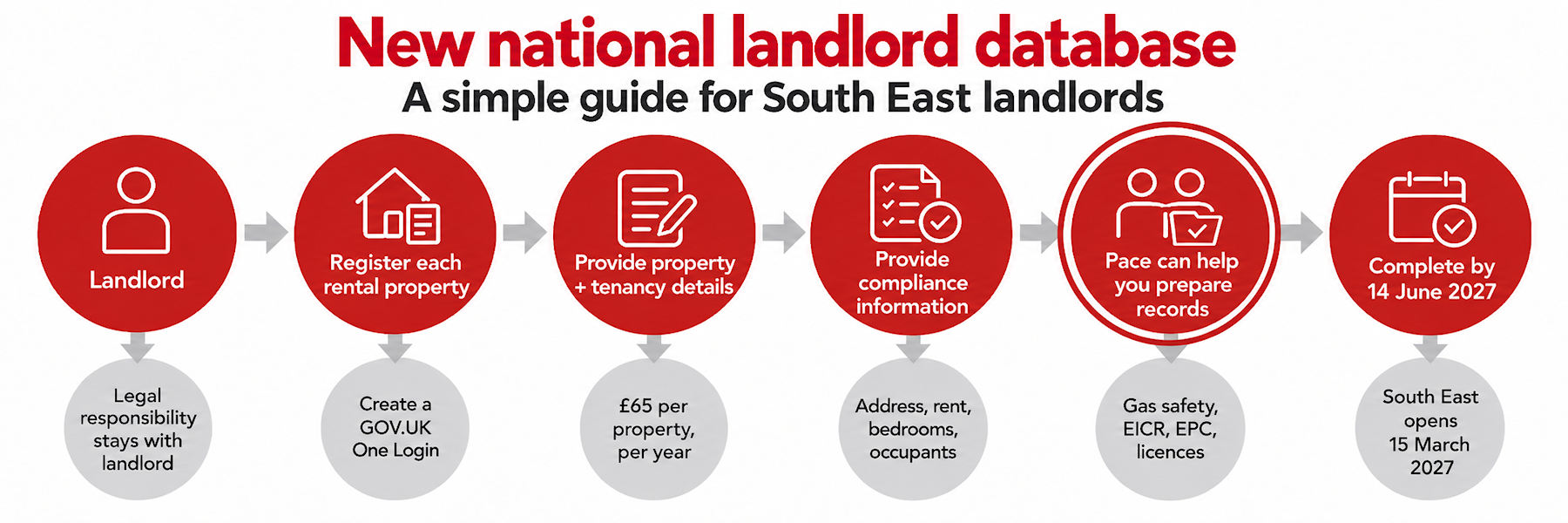
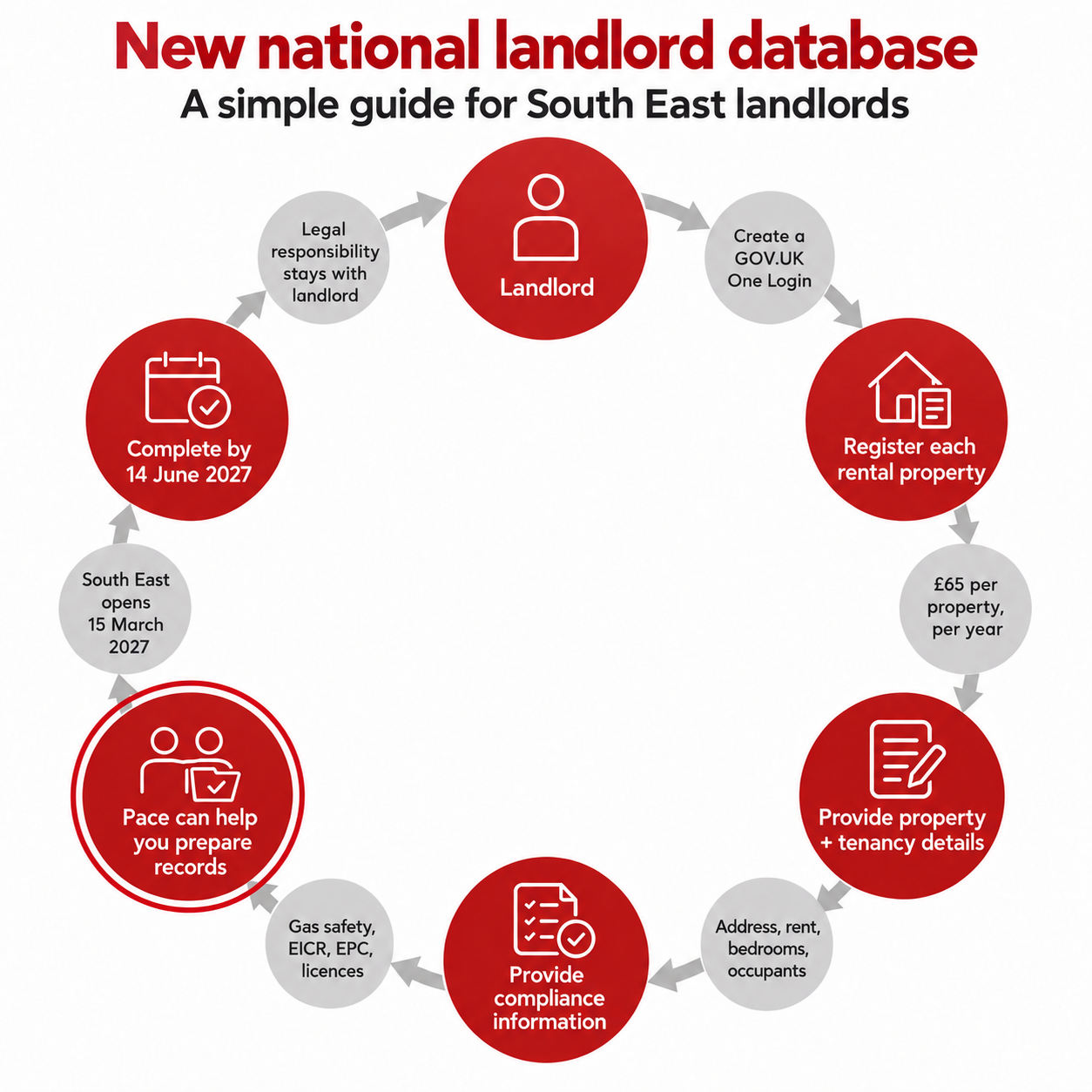
For landlords with properties in Southend and the wider South East, registration will open on 15 March 2027. You will then have three months to complete the process, with a final deadline of 14 June 2027.
There is no need to take action just yet, but we wanted to give you an early overview of what is coming.
What will it cost?
The annual registration fee will be £65 per property.
This is not a one-off charge. Each property’s registration will need to be renewed annually, with the £65 fee payable each year.
During the initial rollout, the fee will be adjusted on a pro-rata basis so landlords registering earlier are not disadvantaged.
What will landlords need to do?
Landlords will be responsible for starting and completing the registration process. Although letting agents and property managers will be able to provide some information on a landlord’s behalf, the legal responsibility will remain with the landlord.
The registration service itself is not yet open, so there is currently no application link to follow. The Government has said that more detailed guidance, including information for letting agents and property managers, will be published before the service launches.
When registration opens, landlords will need a GOV.UK One Login and will be asked to provide information about themselves, their tenancies and each rental property.
This will include:
- The property address, type and ownership details
- The number of bedrooms, occupants and households
- The rent charged and how frequently it is paid
- Whether utilities are included
- Whether the property is furnished
- Details of any HMO, additional or selective licence
- Gas safety information
- Electrical safety information, including the EICR or relevant certificate
- Energy Performance Certificate information
- Details of any relevant energy-efficiency exemption
The good news is that most landlords, and particularly those whose properties are managed by Pace, should already have the majority of this information available as part of their existing property and compliance records.
What does this mean for Southend’s selective licensing scheme?
At the moment, we’ve seen no indication that Southend Council intends to withdraw its selective licensing scheme but there is clearly some duplication between the two systems. Both require landlords to provide property, licensing and compliance information. However, they are separate requirements with different purposes.
The new national database is primarily an information and compliance register. Southend’s selective licensing scheme goes further and can include property visits and more detailed checks on property condition and management standards.
For now, landlords with properties covered by selective licensing should therefore expect the scheme to continue alongside the new national registration requirement.
How could the information be used?
The database will give councils and the Government access to much more consistent and accurate information about privately rented homes, including the rents being charged.
This should have some positive benefits, for example, better rental data will provide a clearer and more reliable picture of local market rents than is currently available.
The Government has also announced that HMRC’s Valuation Office will, in future, take responsibility for deciding challenges to rent increases. Although the detailed relationship between the two systems has not yet been confirmed, its reasonable to expect that the database could provide useful evidence when market rents are assessed.
Under the Renters’ Rights Act, tenants can challenge a proposed rent increase. The higher rent does not become payable until a decision has been made, and there is no financial penalty for making an unsuccessful challenge. Under the current First-tier Tribunal process, the application fee is £47.
This could make challenges more attractive to tenants, so accurate local rental evidence and a well-documented approach to rent reviews will become increasingly important for landlords.


Political Part Conference Roundup, October 2026

New National Landlord Database Is Coming

ESTAS – Best in Postcode, 2026 Winner!
Renters’ Rights Act: What This Means for Tenants

EPC Update 2026: What Landlords Need to Know